
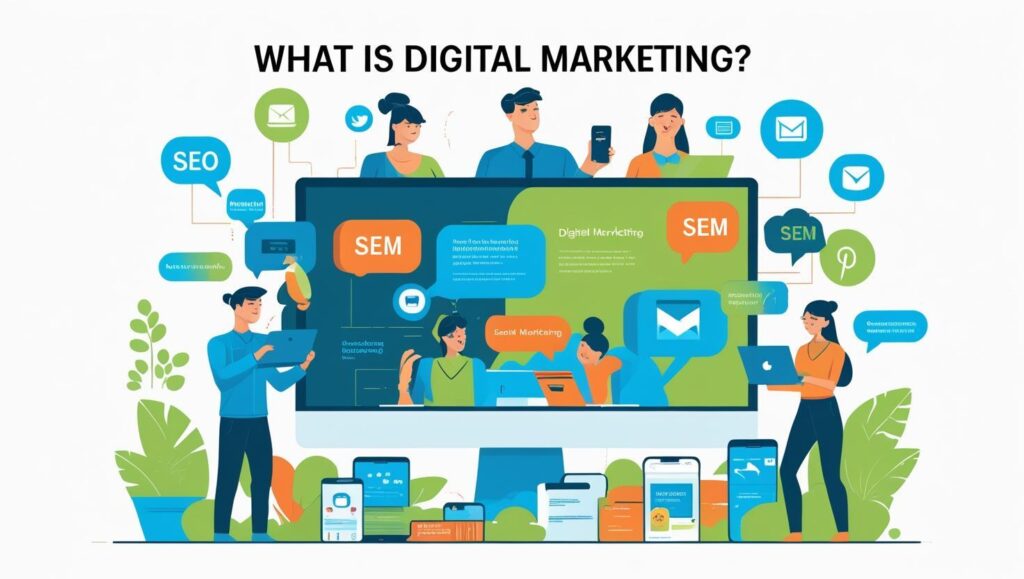
Digital Marketing

create me a image for this focus keyword what is digital marketing 1
Digital Marketing

What is Digital Marketing and Why is it Important ?

What is Digital Marketing? A Complete Definition What is digital marketing? Digital marketing is the use of digital channels—like websites, search engines, social media, email, and mobile apps—to promote products, services, or brands to an online audience. Unlike traditional marketing, which relies on print ads, TV, or radio, digital marketing leverages the internet and electronic devices to interact and build relationships with current and prospective customers. Key Digital Marketing Channels Websites & Landing Pages Search Engine Optimization (SEO) Search Engine Marketing (SEM/PPC) Social Media Platforms (Facebook, Instagram, X) Email Marketing Content Marketing (blogs, whitepapers, videos) Mobile Apps & SMS Display and Banner Advertising Each channel serves specific objectives, but combined in a smart strategy, they drive awareness, action, and loyalty. What Makes Digital Marketing Unique? Two-way communication: Unlike print or TV, digital marketing allows for instant feedback and engagement. Data-driven decisions: Marketers use real-time analytics for precise targeting and continuous improvement. Personalization: Digital strategies can tailor messages to individuals based on behavior, interests, and lifecycle stage. Global reach: Even the smallest brand can access an international audience. Cost-effective: Digital campaigns often yield a higher ROI with lower investment compared to traditional channels. Why is Digital Marketing Important in 2025? 1. Audience is Online With more than 5.5 billion people using the internet globally, your customers are online—searching for solutions and comparing brands. If your business isn’t visible digitally, you risk being invisible to customers. 2. Brand Awareness and Visibility Digital marketing helps you reach audiences far beyond your local area. A strong digital presence ensures your brand is seen where potential customers spend their time—on search engines, social media, and other digital spaces. 3. Highly Targeted Campaigns You can target audiences by demographics, interests, behaviors, location, and more—down to the individual. This drives more effective campaigns and better conversion rates. 4. Measurable Results Unlike traditional ads, digital marketing lets you track every click, impression, and conversion. With built-in analytics, you can optimize campaigns in real time and prove ROI. 5. Competitive Edge Your competitors are already using digital marketing. From small startups to global brands, those who invest in digital see faster growth and higher revenue. To compete and thrive, digital is non-negotiable. Types of Digital Marketing (With Real-World Context) 1. Search Engine Optimization (SEO) Optimizing your website to rank higher in Google searches and attract organic traffic. 2. Pay-Per-Click Advertising (PPC) Paid ads on platforms like Google Ads that put your business at the top of search results. 3. Social Media Marketing Building relationships and driving engagement on platforms like Facebook, Instagram, LinkedIn, and Twitter. 4. Content Marketing Creating valuable content (blogs, videos, infographics) to inform, educate, and inspire your audiences. 5. Email Marketing Sending personalized, relevant emails to nurture leads and drive conversions. 6. Affiliate and Influencer Marketing Leveraging third-party partners and influencers to amplify your brand and expand reach. 7. Mobile & App Marketing Reaching consumers on the devices they use most through push notifications, SMS, and in-app campaigns. Role of the Best Digital Marketing Agency A Best Digital Marketing Agency elevates your brand by: Developing custom strategies aligned to your goals Executing multi-channel, data-driven campaigns Tracking all metrics and optimizing for maximum ROI Keeping you ahead of trends, tools, and algorithm changes Managing your brand presence end-to-end, freeing you to focus on your business Why Partner with the Best Digital Marketing Agency? Expertise: Access to a full team of specialists—strategy, SEO, content, PPC, and analytics Tailored Solutions: Every campaign is bespoke, not “one size fits all” Full-Service Support: From planning to reporting to creative, everything is covered Measurable Growth: Agencies are accountable for delivering visible business growth The Biggest Benefits of Digital Marketing for Businesses Benefit Why It Matters Global, 24/7 visibility Attract and engage customers worldwide Advanced targeting Reach the right people at the right time Cost-effectiveness Lower costs, higher ROI than traditional Adaptability Fast changes and optimized campaigns Analytics & reporting Know exactly what’s working, and why Brand loyalty Build deeper relationships with your audience Current Trends in Digital Marketing (2025) AI-Powered Personalization: Smarter targeting and content creation Voice & Visual Search: Optimizing for how people search using voice assistants and image recognition Video & Interactive Content: Engaging, immersive experiences capturing attention Privacy-Focused Marketing: Stricter regulations mean smarter data use and transparency Your Quick Checklist: How to Leverage Digital Marketing Audit your website and digital presence Research where your target audience spends time online Develop a clear, multi-channel digital marketing strategy Measure everything—traffic, engagement, conversions Optimize campaigns regularly based on real data Partner with the Best Digital Marketing Agency for advanced results FAQ: What is Digital Marketing? What is digital marketing, in a nutshell?What Is Digital Marketing-It’s all marketing completed through digital channels, connecting brands with audiences online. Can any business benefit from digital marketing?Absolutely—no matter size or industry. What results can I expect?Increased brand awareness, more qualified leads, higher sales, and measurable ROI. Semantic & LSI Keywords to Use Digital marketing, online marketing, SEO, content marketing, brand awareness, PPC advertising, email marketing, social media strategy, internet users, mobile marketing, data analytics, business growth, customer engagement, ROI, omnichannel. Ready to Grow? Take Action! Understanding what is digital marketing is only the first step. Now is the time to invest in your brand’s future with a powerful, progressive digital marketing strategy. Download our “What is Digital Marketing” starter checklist Book a free consultation with the Best Digital Marketing Agency Transform your reach, revenue, and reputation in 2025 and beyond! What is digital marketing? It’s your pathway to bigger audiences, smarter growth, and business success—let the Best Digital Marketing Agency guide you every step of the way
step by step
Digital Marketing

Step-by-Step Guide to AI in Digital Marketing for Smarter Growth

Why AI in Digital Marketing is a Game Changer AI in Digital Marketing has always been about understanding customers. In the digital age, the challenge is not about finding data — it’s about making sense of too much of it. AI solves this problem by analyzing massive datasets instantly and generating actionable insights. Key Reasons to Use AI in Digital Marketing: Data-Driven Insights – Turn raw numbers into smart strategies. Hyper-Personalization – Deliver the right message to the right person at the right time. Time-Saving Automation – Eliminate repetitive tasks like A/B testing, scheduling, and reporting. Enhanced Customer Experience – AI chatbots and voice assistants provide instant support 24/7. ROI Optimization – AI ensures you spend smarter, not harder, across channels. Step 1: Understand Core Applications of AI Before implementing AI in your digital strategy, it’s essential to understand its applications. 1. Content Creation & Copywriting AI writing assistants like ChatGPT, Jasper, and Copy.ai help brands generate blogs, ads, and email campaigns in seconds. For example, Puma uses AI-generated product descriptions to speed up its eCommerce workflows. 2. SEO & Search Optimization AI tools such as Surfer SEO and Clearscope analyze search intent, suggest semantic keywords, and even predict trending topics. Instead of guesswork, marketers can rely on AI to craft SEO strategies that match how people search. 3. Paid Advertising Platforms like Albert.ai optimize ad placements in real-time. AI constantly adjusts targeting, bids, and creatives, ensuring higher conversions with lower costs. 4. Social Media Marketing Tools like Buffer AI and Sprout Social identify the best posting times, generate captions, and even track competitor trends. 5. Customer Engagement AI-driven chatbots such as Drift or Intercom enhance user interactions, while recommendation engines (like Netflix or Amazon) provide personalized suggestions. 6. Email Marketing AI ensures your emails don’t end up in the spam folder. Tools like Mailchimp AI analyze subject lines, sending times, and personalization to maximize open rates. Step 2: Define Your Marketing Goals Using AI in Digital Marketing without clear goals is like sailing without a map. Identify what you want to achieve: Increase traffic → Use AI-powered SEO tools. Boost conversions → Leverage AI for ad targeting. Improve retention → Focus on personalized email campaigns. Reduce costs → Automate repetitive marketing tasks. When your goals are measurable, AI tools will deliver the best results. Step 3: Choose the Right AI Tools Not all AI platforms serve the same purpose. Here’s a categorized list to help you pick the right stack: SEO Optimization → Surfer SEO, SEMrush AI, Clearscope Content Creation → Jasper, ChatGPT, Copy.ai Advertising → Albert.ai, AdCreative.ai Social Media → Hootsuite AI, Buffer AI Customer Engagement → Drift, ManyChat, Intercom Analytics → Google Analytics 4 with AI-driven predictions 💡 Pro Tip: Start with one tool per marketing channel, then expand gradually. Step 4: Implement AI in Small Steps Trying to revamp your entire marketing process with AI at once can backfire. Instead: Start with a single area (e.g., automate social media scheduling). Track results over 30–60 days. Add AI for another function (ads, email marketing, etc.). Scale based on proven ROI. This way, you reduce risk while learning AI’s strengths. Step 5: Train Your Team AI in Digital Marketing isn’t about replacing humans but empowering them. Ensure your team: Knows how to use AI tools effectively. Balances automation with creativity. Understands ethical AI practices (data privacy, fairness, and bias reduction). Investing in AI upskilling ensures you maximize results. Step 6: Measure Performance & Optimize AI tools provide advanced analytics, but human oversight is crucial. Track: Website traffic growth Conversion rates Engagement levels Cost per acquisition (CPA) ROI per channel Review results monthly and refine your strategy. Real-World Examples of AI in Digital Marketing Coca-Cola – Uses AI to test and optimize ad creatives globally. Spotify – Leverages AI for personalized playlists like “Discover Weekly.” Sephora – Implements AI chatbots for product recommendations. Nike – Uses AI to predict fashion trends and optimize campaigns. Small Businesses – Even startups use AI-driven SEO and email campaigns to compete with large brands. Benefits of AI in Digital Marketing Faster Execution – Launch campaigns in days, not weeks. Cost Efficiency – Lower ad costs with smarter targeting. Personalization – Customers receive tailored recommendations. Time Savings – Automate reporting, testing, and content creation. Smarter Decisions – Predictive analytics ensures data-backed strategies. Challenges of Using AI in Digital Marketing While the benefits are massive, AI adoption comes with hurdles: High Initial Investment – Premium AI tools can be costly. Data Privacy Risks – Customer trust depends on responsible AI use. Over-Reliance on Automation – Creativity can suffer if humans step back. Learning Curve – Teams may need training to adapt. The solution? A hybrid approach where AI handles data and automation while humans focus on creativity and strategy. Future of AI in Digital Marketing AI is evolving rapidly. Expect to see: Voice Search Optimization – With smart speakers booming, AI will optimize for spoken queries. AI-Generated Video Content – From product demos to influencer avatars. Predictive Analytics at Scale – Campaigns that anticipate customer behavior. Ethical AI Marketing – Transparency and fairness will define successful brands. Businesses that adopt AI today will lead the digital marketplace tomorrow. FAQs About AI in Digital Marketing Q1: Will AI replace digital marketers?No. AI handles repetitive and data-heavy tasks, but creativity, strategy, and emotional intelligence remain human strengths. Q2: Is AI marketing only for big brands?Not at all. Startups and SMBs can use affordable tools like Mailchimp AI, Buffer AI, or free SEO optimizers. Q3: How much does AI marketing cost?It depends. Some tools are free, while premium platforms range from $20/month to thousands for enterprise use. Q4: Can AI improve customer trust?Yes. By delivering personalized, transparent, and unbiased campaigns, AI strengthens customer relationships. Step-by-Step Checklist for Getting Started Define your business goals. Select AI tools based on your needs. Start small with one campaign. Train your team on AI usage. Measure results and optimize. Scale gradually across channels. Final Thoughts AI isn’t here to replace marketers — it’s here to make them smarter, faster, and more effective. By implementing AI in digital marketing across content creation, SEO, ads, and customer engagement, you can achieve better ROI, happier customers, and a competitive edge. 👉 The takeaway? Start small, experiment, and scale. The brands that adopt AI today will dominate tomorrow.

Scroll to Top